Less screen time
Regardless of why you want a pedometer without a screen, there are objections to the Garmin Cirqa.
The battery life
Good at logging exercise automatically
Still looks like a pedometer
Expensive
Pedometers without a screen are trending, Google has caught on with Fitbit Air and now Garmin with Cirqa. I am confused. Pedometers without screens are nothing new, but they were thoroughly outcompeted by wristbands with screens at least a decade ago. Why sudden comeback now?
One reason could be aesthetic, you simply don’t think it looks good with a technology gadget on your arm. That can also explain the rise of smart rings. The rings are expensive and a bracelet could be a budget option, in general you may want a bracelet without a screen to save money. A third reason I can think of is as a kind of digital detox. You want to measure your health but think that smartwatches are too attention-consuming and distracting.
If it’s money you want to save, the Garmin Cirqa is not the obvious choice, the price is SEK 2,290, you can get an activity bracelet with screen from Garmin for a little more than half the price. Or for that matter Google’s Fitbit Air.
Still looks like a pedometer
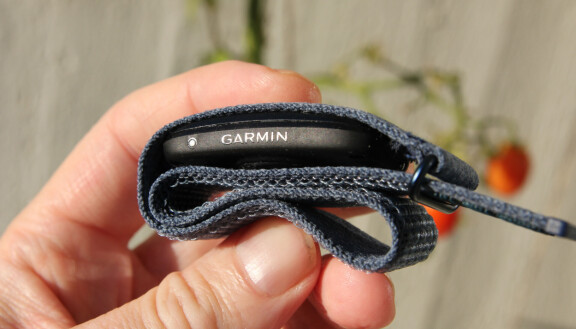
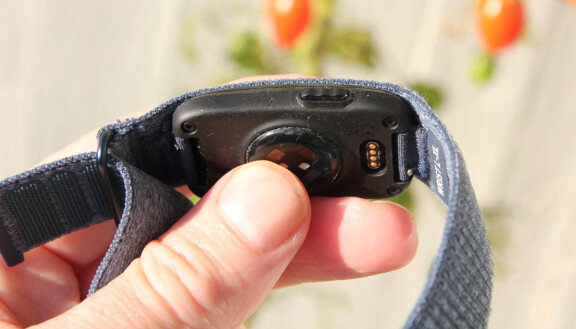
If it’s the aesthetics that attract you, I don’t think Cirqa succeeds either. Where the Fitbit Air is so small and discreet that you can be tricked into thinking it’s just a fabric bracelet on your arm, the Garmin Cirqa looks most of all like an activity bracelet where you put the band over the screen. The activity meter is quite thick and also sticks out on the sides of the band. It cannot be mistaken for just a decorative bracelet. That said, the infinitely adjustable fabric bracelet is exceptionally comfortable to wear.
If, on the other hand, you want to measure your health without being distracted, then Garmin has something with Cirqa. It doesn’t make much of a fuss. It has vibrator feedback, but it is used sparingly. Mainly for silent wake-up calls and to mark laps if you have actively switched on exercise logging. The wristband is capable of logging different forms of training automatically, but it is nothing that requires immediate attention, but something you can check in Garmin’s Connect app afterwards.
Battery life can also be a reason. An activity tracker that needs to be recharged frequently is annoying. Garmin claims 10 days of battery life for the Cirqa, and I even get a bit more than that when testing. It’s excellent for an activity bracelet, although it takes a good hour to charge it when the battery is empty.
Logs training well
Garmin Cirqa has a button, which is used partly to silence alarms and partly to start and stop a training session. In Garmin Connect, you set the activity that the button should activate. The band is also able to automatically identify a range of different activities, and if there are outdoor activities where you move, your position is logged using the mobile’s GPS, even if you did not start the activity manually. You can subsequently go in and confirm that the correct activity type was identified.
You can also choose to log activities in addition to the one associated with the button manually in the app. One could expect that when the pedometer has no interface, an effort was made to make logging in the app as inviting as possible, but the information you get during ongoing training is spartan and boringly presented, and it takes quite a few clicks to start the training.
Of course, the band measures health data such as heart rate (with high precision) and sleep (with slightly lower precision) and in the app on the mobile you get morning and evening reports, but they are a bit truncated even if they contain quite a lot of analysis.
No movement reminders
Of course, there’s a lot that a regular pedometer can do that the Garmin Cirqa can’t, like receiving notifications, reminding you to move if you’ve been sitting still for too long, or even showing what time it is. For the latter, you can set the bracelet to vibrate every full hour.
If you have set the bracelet to smart wake-up, it can start vibrating up to half an hour before the scheduled time if it senses that you are still awake, so that you are woken up when you are a light sleeper and not when you are in a deep sleep. This works a bit shaky, sometimes I’m woken up just by moving a bit, other times the alarm doesn’t go off until I’m already up.
Garmin Cirqa feels a bit like it has identified a trend and wants to be quick to latch on to it, without any great feeling for what lies behind the trend. Above all, I think it is expensive in relation to what you get.
But maybe I don’t belong to the target group.
Type: Activity bracelet without screen
Measure: 27 x 47 x 9 mm without strap
Bracelet: S–M: 120–200 mm L–XL: 145–240 mm
Weight: 14.8 grams without bracelet, 5.9 – 6.4 grams for the bracelet
Material: Plastic
Screen: No
Battery life: 10 days
Sensors: Accelerometer, heart rate monitor, oxygen saturation acclimatization
Water protection: 5ATM
Works with: iPhone, Android
Price: SEK 2,290
The battery life
Good at logging exercise automatically
Still looks like a pedometer
Expensive