Not every final boss makes your hands sweaty. Some look like they’re about to snatch the controller out of your hand – and then end up lying in the dirt after a few seconds. Others fail not because of their level of difficulty, but because of poor game design, disappointing staging or a boss mechanic that feels like a Monday morning. The big final battles in particular often remain in the memory longer than the actual game. Unfortunately, this isn’t always true for the right reasons. Here are some bosses where the path to the finale was much more exciting than the actual fight.
Mysterio (Spider-Man 2)
Anyone who played Spider-Man 2 probably remembers the spectacular fights against Doc Ock or Rhino. And then there is Mysterio. The master of illusions announces himself cockily, builds tension and initially seems like the next big test. In fact, a single blow is enough and the supposed supervillain collapses. The real joke: It is precisely this anticlimax that makes the fight unforgettable to this day. As a boss, Mysterio is quite a laughing stock – but as a running gag, the appearance works surprisingly well.
Bowser (Super Mario Bros.)
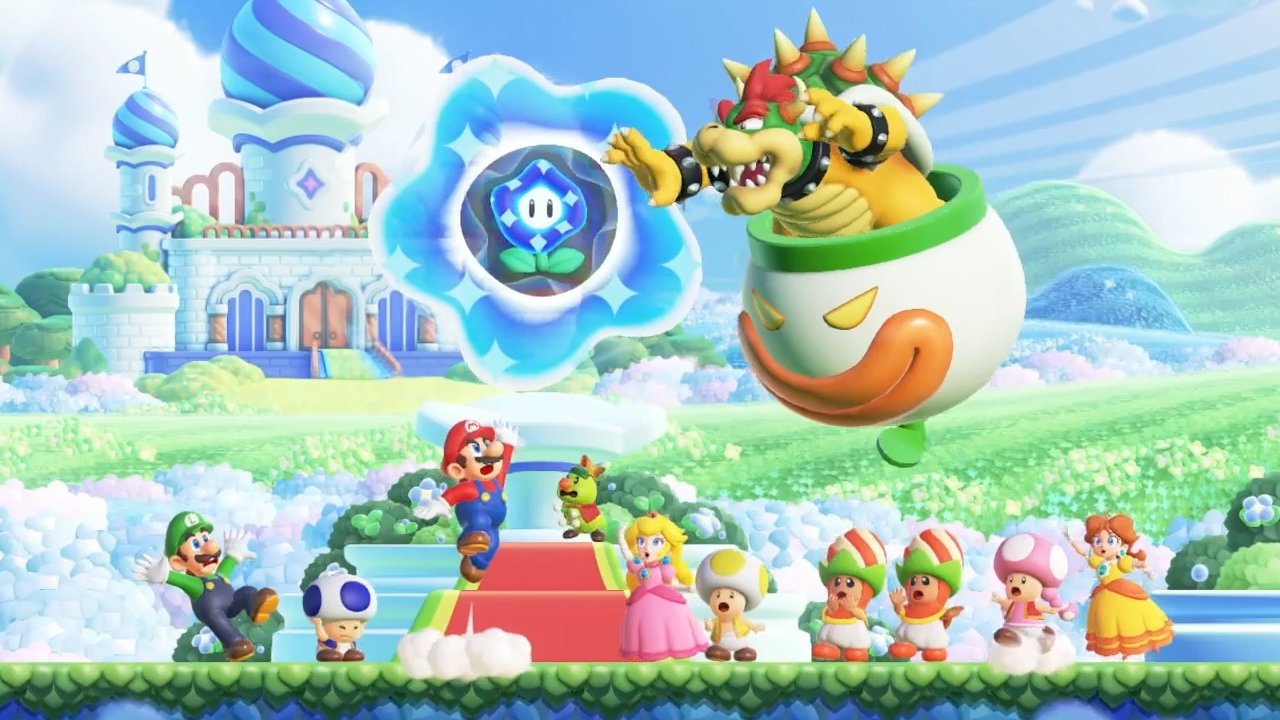
Hardly any villain is as closely linked to video games as Bowser. Today, the Koopa King regularly engages in spectacular duels with Mario. His very first appearance, on the other hand, is surprisingly unspectacular. A courageous jump over the head, the bridge collapses and Bowser disappears into the lava. Complete. Of course, the finale is still historic – after all, it laid the foundation for one of the most famous rivalries in video game history. This boss fight just wasn’t particularly exciting.
Professor Nakayama (Borderlands 2)
Borderlands thrives on strange characters, and Professor Nakayama is undoubtedly one of them. The self-absorbed Handsome Jack fan annoys you for hours with his big plans and announces the ultimate duel. You finally come face to face with him… and then the man stumbles down the stairs and breaks his neck. Boss fight ended. This isn’t so much bad game design as it is a deliberately placed Borderlands joke. However, anyone who was hoping for a worthy conclusion to the DLC must have sat in front of the screen quite puzzled.
Alastair (The Order: 1886)
The Order: 1886 wanted to be a movie to watch. The problem: In the finale you’re almost watching more than fighting. The showdown against Alastair consists largely of quick-time events in which you press the right button at the right moment. It looks nice, but it feels like the game took the controller away from you just before the finish line. Even if a boss fight would have worked as a cutscene, something usually goes wrong.
Pinwheel (Dark Souls)
A Dark Souls boss in a list of worst bosses? In fact, Pinwheel truly deserves this spot. While almost every other boss in Lordran mercilessly shows you the limits, the Lord of the Skeletons seems like a mini-boss that was accidentally placed too early. His attacks hardly do any damage and before his cloning tricks can even become dangerous, he is usually already in the dust. Pinwheel probably impressed more players with his mask than the actual combat.
Cyberdemon (Doom 3)
The name alone actually promises a nightmare on two legs. Finally, at the end of Doom 3 you come face to face with the Cyberdemon himself – an icon of shooter history. The fight is all the more sobering. His attacks are easy to read, dodging is rarely a problem and with the right tactics the Helllord loses his fear surprisingly quickly. After all the atmospheric build-up, the finale could have used a lot more bite.
Lucien (Fable 2)
The entire plot of Fable 2 revolves around Lucien. He manipulates kingdoms, doesn’t shy away from any crime and is portrayed as an almost untouchable puppet master. When you finally face him, you’re in for an epic showdown. Instead, a single hit is enough – or your companion can even beat you to it. The idea behind it is understandable: Lucien shouldn’t be a great fighter. Nevertheless, after the long build-up phase, the finale leaves a surprisingly empty impression.
Malthael (Diablo 3: Reaper of Souls)
For once, the problem here isn’t the boss fight itself. Malthael is quite demanding and can give you a lot of trouble on higher levels of difficulty. What’s more disappointing is what happens afterwards. For years, Blizzard was known for lavishly produced CGI sequences, which were practically a trademark of the Diablo series. However, after defeating the Angel of Death, the credits immediately follow. No grand finale, no epic reward – just over. For many fans, it felt like the lights suddenly went on after fireworks.
Alduin (The Elder Scrolls V: Skyrim)
When Alduin lays waste to Helgen at the beginning of Skyrim, it is immediately clear: This dragon is a completely different breed. It’s just a shame that the game can’t keep this promise until the finale. After dozens of hours, you have already killed countless dragons, know their attack patterns inside out and face Alduin with the same routine. This makes the Eater of Worlds seem more like a particularly important standard dragon than the divine threat that the game has been warning you about all along.
Nihilanth (Half-Life)
Half-Life is one of the most influential shooters of all time. It is all the more striking that the final, of all things, is still causing discussions today. With Nihilanth, you won’t find a classic boss fight on The result seems unnecessarily bulky and slows down the pace shortly before the credits roll. Not every legendary shooter ends with a legendary boss.
Joker (Batman: Arkham Asylum)
Batman and Joker have been playing a cat-and-mouse game for decades that relies primarily on intelligence and psychology. That’s exactly why the finale of Arkham Asylum still seems so strange to this day. Instead of challenging Batman with one last ingenious plan, Joker is quickly transformed into a muscle-bound boss by the Titan serum. The result is not a bad boss fight, but one that has surprisingly little to do with the Joker. This break in style is particularly noticeable in a game that otherwise understands its characters so well.
Hoyt Volker (Far Cry 3)
Far Cry 3 actually has the perfect final boss – and takes him away from you way too early. Vaas Montenegro steals the show with every scene and is still one of the most iconic video game villains to date. Hoyt Volker then takes over. The problem: He seems like a substitute who suddenly has to play in the final.
The actual showdown again relies on a hallucinogenic knife sequence and a few quick-time events. It’s staged well, but emotionally the fight never reaches the intensity of the encounters with Vaas. Not because Hoyt is a bad villain – but because his predecessor set the bar unattainably high.
Bed of Chaos (Dark Souls)
Dark Souls has earned its legendary reputation with uncompromising but fair boss fights. And then comes Bed of Chaos. Instead of endurance, timing and ability to react, luck, jumping skills and the hope of not being swept into the abyss by meter-long branches suddenly count. Anyone who dies can complete the entire obstacle course again. This seems less like a Souls boss than like a platformer from another game series. To this day, hardly any opponent is criticized as unanimously within the community as this oversized tree creature.