In contrast to Apple is Google willing to take risks and experiment, for better or for worse. As an enthusiast, Google’s various quirks can be exciting, but when features come and go, it’s at the same time easy to get the impression that Google is improvising and sometimes doesn’t really know what they’re doing.
Here are Google’s biggest mistakes in the Pixel series since the start in 2016.
1. Project Soli radar in Pixel 4
Google’s biggest mistake has to be the radar – Motion Sense – in Pixel 4 and Pixel 4 XL. Who wants to control a mobile by waving in the air above the screen, without touching the panel? One of the few advantages is if you cook and have sticky hands, but it is a very niche area of use. Did Google think this would be a hit? Both Samsung and LG had also already offered similar gimmicks in smartphones before without success.
The radar was also used to a limited extent for face unlocking, but Google’s “Face ID” would have worked just as well without Soli.
2. Hilight in Pixel 11 Pro
The radar in the Pixel 4 required a lot of research and development and was expensive to produce. The notification light in the Pixel 11 Pro is a far less expensive flop, but a flop nonetheless. We have not heard anything positive said about the lamp at all.
The main objection has not been the idea itself but how limited the implementation is. The lamp can only glow in a handful of colors when selected contacts call, as well as glow during voice calls with Gemini. Because of the notification light, the flashlight and flash are less powerful than before. Depending on how you use the phone, Hilight is either a completely useless or borderline useless feature.
3. Pressure sensitive frame: Active Edge

Google inherited this feature from HTC: a pressure-sensitive bezel. By simply grasping and squeezing the construction, it was possible to start the Google Assistant or silence alarms, timers, notifications and incoming calls. The feature was part of the Pixel 2–Pixel 4.
Maybe it’s a shame to call Active Edge a flop or gimmick because some actually enjoyed the feature, but Google removed the pressure-sensitive bezel for a reason.
4. The thermometer in Pixel 8–Pixel 10
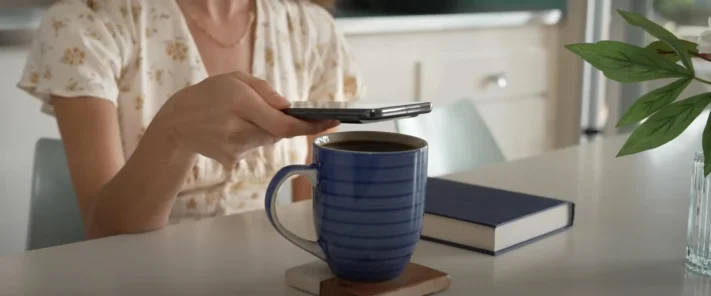
One of Google’s experimental hardware features in the Pixel is the thermometer that debuted in the Pixel 8 Pro and was allowed to remain for two more generations. The thermometer works for all intents and purposes and can be used, among other things, as a fever thermometer, but it is yet another one of Google’s wayward and temporary whims.
5. Face Unlock

The Pixel 4 and Pixel 4 XL were Google’s first phones with secure face unlock that can handle darkness. Face unlock worked great and still does. Unfortunately, so is Google’s only phones with a complete equivalent to Face ID. Namely, Google developed the technology and integrated a whole range of sensors, only to immediately abandon secure face unlocking and return to fingerprint readers: a flop.
Fortunately, there are signs that Google and Android will offer secure face unlock that works in the dark in the future.
6. The design of the Pixel 3

When competing manufacturers had begun to offer thin symmetrical frames around the screen and modern designs, Google launched a phone that had a large “notch” with dual front cameras, as well as a very rough bottom frame. Pixel 3 already looked outdated on launch day, fall 2018.
7. Pixel 5
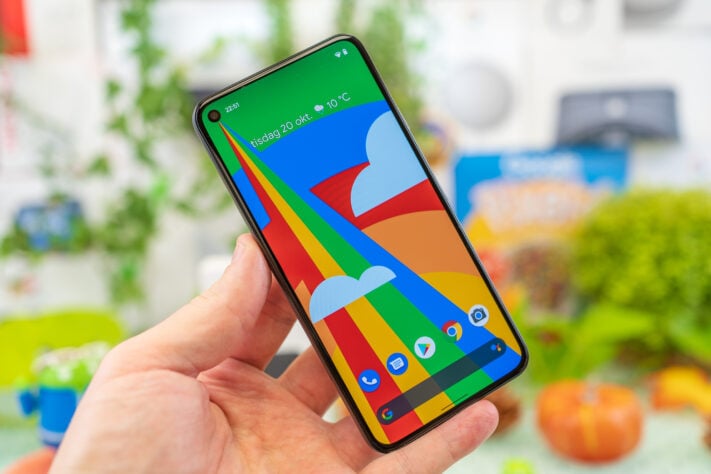
The Pixel 5 is perhaps the only Android mobile ever to offer worse performance than its predecessor: The Pixel 5 is a less powerful phone than the Pixel 4. Many appreciated the Pixel 5 and the phone’s sleek form factor, but it was a strange move by Google and a one-off in the Pixel series.
8. Tensors

No one can call Tensor a pure success except perhaps Google. The search giant’s chip debuted in the Pixel 6 and Pixel 6 Pro in 2021. Tensor was manufactured by Samsung until the Tensor G4, after which Google switched to TSMC. Some of the advantages are that Google has been able to adapt the chip for its own needs, optimize AI performance, and have full control over how long the chip is updated. In the long run, we suspect that Google has had to pay less than if they had continued to buy chips from Qualcomm.
Some of the early objections to Tensor were lack of performance, high heat generation and poor battery life. Tensor has never been able to compete with Qualcomm’s, Apple’s, Samsung’s or Mediatek’s fastest chips in terms of pure performance.
Critics argue that if Google is going to sell flagships with flagship prices, the phones should offer flagship performance. The attitude towards Tensor has been lukewarm overall: the chip is fine and good enough for everyday use, but Tensor has not impressed or been seen as a selling point.