Both phones are newly launched, Xiaomi’s Redmi phone is even so new that at the time of writing it is sold under a lower introductory price, but after that the price will land at SEK 6,500, while the Samsung phone with the same 256 GB storage amount costs from SEK 8,500 to 11,500 depending on which retailer you choose. Samsung themselves charge 10,690 for it, but as with all prices they can of course come down over time.
The phones’ characteristics, on the other hand, are more stable and when the Xiaomi Redmi Note 17 Pro Max excels with battery capacity and fast charging, Samsung counters with build quality, software and raw performance. Just as the price tags indicate, the Samsung Galaxy S26 FE is a lean top model, while the Xiaomi Redmi Note 17 Pro Max is more of a mid-range mobile, but one of the more lavish ones.
Build quality and materials
Samsung Galaxy S26 FE
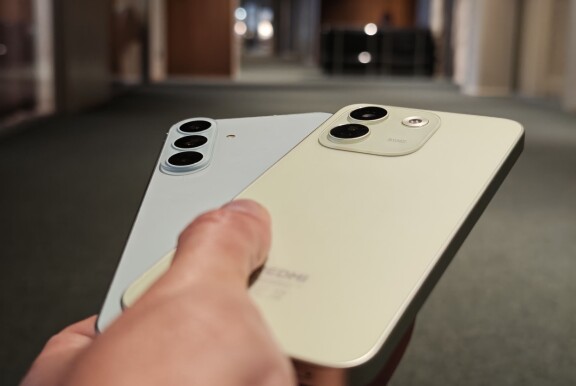
In some places, and of course especially if you have a cover on your phone, the material choices become less noticeable, but as soon as we examine in detail, the Samsung Galaxy S26 FE shows its class. Here, there is really nothing that reveals that this is a slightly cheaper phone. We have a stylish frame in aluminum and we have durable glass both on the front and on the back. In addition to a more lavish exterior, the Samsung Galaxy S26 FE also has a more durable screen. Gorilla Glass Victus 2 is used here, which is more resistant to falls. The differences between the phones are clearly noticeable and it will be even more noticeable if we were to drop them on the asphalt, or scratch them with keys in the bottom of the bag or pocket.
Rating: 5
Xiaomi Redmi Note 17 Pro Max
One of the dividing lines between a top model and a phone in this middle tier is precisely the build quality and which materials are used in manufacturing. Consequently, it is mainly plastic that applies here, both in the frame and on the back. The screen glass, on the other hand, is of course glass, but of the Victus Plus type and not the more durable, newer one that Samsung uses. Plastic, which is therefore in both the frame and the back, does not have to be a bad choice here. It has advantages and often results in lower weight and, compared to even durable glass, it is often more resistant to shocks and falls, but worse at coping with scratches.
Rating: 3
Winner Build quality and materials: Samsung Galaxy S26 FE
Camera
Samsung Galaxy S26 FE
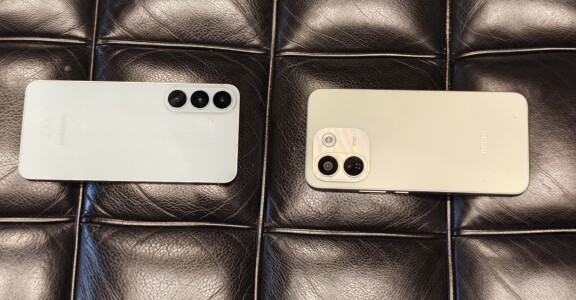
On paper, Samsung has a clear advantage here. We can never be sure that neither the number of cameras nor the number of megapixels in each of the cameras is a sure indication of image quality. However, a larger sensor is a promise of better images and so is optical zoom, both of which Samsung has, but not the opponent. Samsung has been a bit stagnant in camera development in many of its phones with more or less the same hardware year after year, so software and post-processing perhaps become extra important here, but it is a development that more and more mobile manufacturers are joining. This means that Samsung has more raw power and thus better detail in dark images. However, the color reproduction is not as convincing when that raw strength is not required, such as in daylight or to highlight the face in a portrait. With optical zoom, which the opponent completely lacks and has to rely on digital zoom, Samsung clearly has a clear advantage.
Rating: 4
Xiaomi Redmi Note 17 Pro Max
At Xiaomi, the cameras in the phones generally have a high priority, which is noticeable through the manufacturer’s collaboration with Leica. In the Redmi phones, however, it is conspicuous by its absence, we get no Leica interference. Nevertheless, I react that color reproduction and processing are excellent. Often when we take portrait photos and also other simpler photos, the Xiaomi Redmi surpasses with better skin tones and depth in the photos. Xiaomi thus does more with its limited resources in this context. For zoom, the phone is referred to digital zoom and already at 2-3 times magnification, the quality therefore suffers, while the opponent can handle twice as much.
Rating: 3
Winner Camera: Samsung Galaxy S26 FE
System and performance
Samsung Galaxy S26 FE
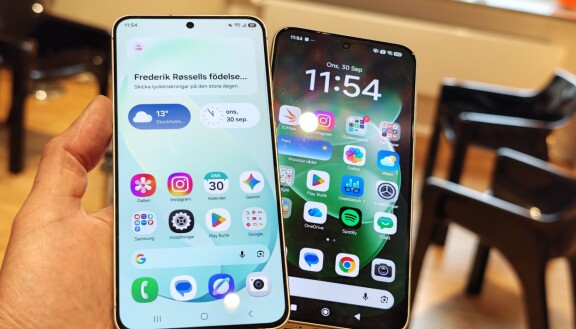
Basically, both phones have Android, but Samsung has a clear advantage on several points. First, it comes with the latest Android and above all, you get seven years of promised Android updates and security updates. In addition, Samsung’s interface is well done and well thought out with a range of proprietary apps that often offer an improved function compared to the basic one in Android. Galaxy Ai is also featured here with call recording, translation, image editing and more. With Swedish language support. Last but not least, the performance here is superior to what you get in the opponent, which is mainly noticeable in more demanding apps, less so in simpler everyday use such as surfing, reading, checking social media.
Rating: 5
Xiaomi Redmi Note 17 Pro Max
Here we don’t get the latest Android from the start and only provide four years of updates, half of what you get in the opponent. Xiaomi overlays its Hyper OS over Android and it can give a relatively messy impression, with few real improvements. In the weeks we tested the phone for the individual test, however, simpler functions, despite limited performance, flowed reasonably well. Soon after the single test was published, another problem presented itself. Xiaomi’s browser started sending advertising messages, but you can get rid of it anyway, the smartest way is to completely uninstall that app.
Rating: 2
Winner System and performance: Samsung Galaxy S26 FE
Battery and charging
Samsung Galaxy S26 FE
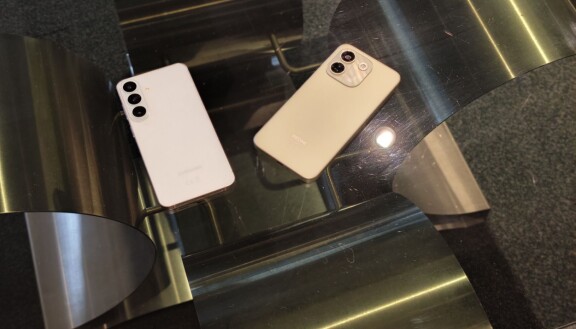
There is wireless charging here, which the opponent lacks, but the wireless charging is also the only thing that really speaks for the Samsung here. A disadvantage of Samsung’s system, which we praised above, is that it seems poorly adapted to save power and even when we are not using the phone actively, the battery level ticks down quickly. Battery capacity and charging speed here are normal, but of course it still has to be overtaken by Xiaomi’s extreme numbers.
Rating: 3
Xiaomi Redmi Note 17 Pro Max
An extreme battery with a whopping 9210 mAh and 100 W fast charging are both about double what we get in the opponent, so here it is a complete knockout in favor of Xiaomi. The disadvantages we listed with limited performance can of course also help to keep the battery life up, but Xiaomi’s system also seems well adapted to economize on resources.
Rating: 5
Battery and charging winner: Xiaomi Redmi Note 17 Pro Max
Overall rating:
Samsung Galaxy S26 FE: 17
Xiaomi Redmi Note 17 Pro Max: 13
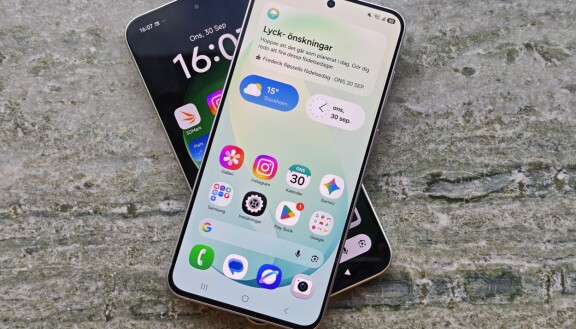
WINNER: A clear winner that wins with safe luxury, good performance and a well-thought-out overall design. Xiaomi surprises in the cameras and does a lot with limited hardware.